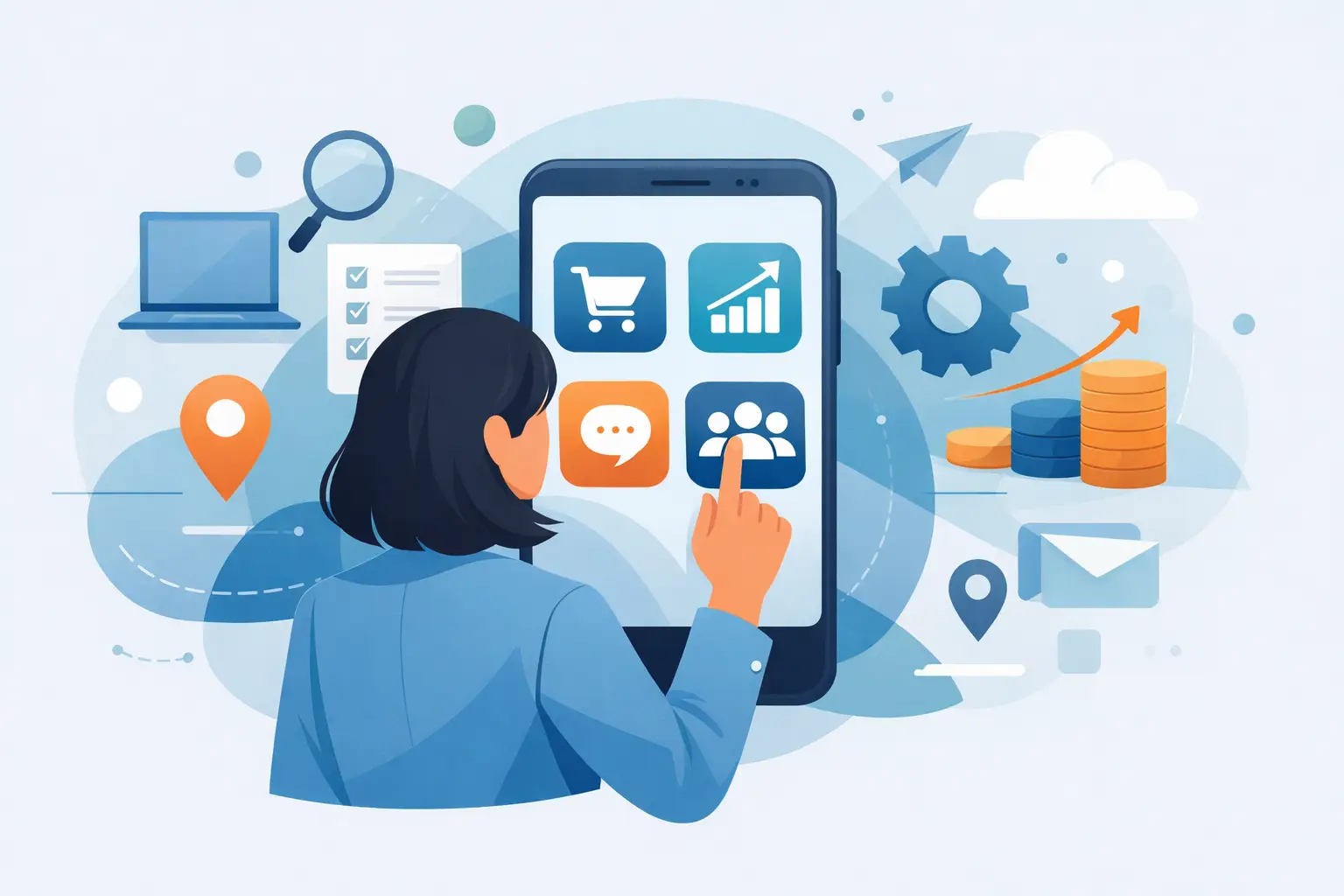
How to Choose a Direct Sales App
Choose a direct sales app that fits how you sell. Learn what to look for in customer tracking, parties, inventory, invoices, privacy, and mobile use.
If your customer notes are in one app, party dates are in your calendar, inventory lives in a spreadsheet, and invoices are somewhere in your email, you do not have a small problem. You have a system problem. The right direct sales app fixes that by putting your daily work in one place, so you can follow up faster, miss fewer sales, and spend less time trying to remember what happened last week.
For direct sales consultants, that matters more than most software companies understand. Your business runs on relationships, repeat orders, party activity, and consistent follow-up. A generic CRM might track contacts. A basic bookkeeping tool might record payments. But direct selling has its own workflow, and your tools need to match it.
What a direct sales app should actually do
A useful app should support the way you sell, not force you to build workarounds. If you run home parties, online parties, one-to-one orders, and repeat customer follow-up, your app should connect those activities instead of treating them as separate jobs.
At a minimum, a direct sales app should help you track customers, organize orders, manage inventory, schedule parties or events, record payments, and keep notes that are easy to find later. That sounds simple, but this is where many consultants lose time. They can enter data, but they cannot quickly turn that information into action.
For example, it is not enough to know who ordered last month. You need to know who has not reordered yet, who hosted a party, who said they were interested in a product line, and who needs a follow-up message before payday or before a promotion ends. Good software helps you see what to do next.
Why generic tools often slow direct sellers down
Many solo sellers start with tools that were not made for direct sales. That is understandable. At first, a notes app, spreadsheet, and calendar can feel good enough. The problem shows up when your customer base grows.
Generic apps usually separate the parts of your business that need to work together. Your customer list sits in one place. Product stock is in another. Party planning is manual. Invoices require extra steps. Follow-up depends on memory. That setup creates friction, and friction costs sales.
There is also the issue of mobile use. Direct sales rarely happens at a desk. You are answering customer questions between errands, checking product availability before a party, logging an order from your phone, or reviewing who to contact while waiting in line. If an app is difficult on mobile, or needs a constant internet connection, it will not support how you actually work.
How to evaluate a direct sales app
Choosing software does not need to be complicated, but it should be practical. The best test is to compare the app against your real weekly workflow.
1. Start with customer follow-up
Most direct sales businesses grow through repeat customers and personal relationships. That means your app should make follow-up easy, not hidden behind too many clicks.
Look for a system that lets you store customer details, order history, notes, preferences, and reminders in one record. If a customer bought skincare six weeks ago, hosted a party in March, and asked about a summer product bundle, you should be able to see that quickly. You should not need to search across several tools.
If follow-up is weak, sales become inconsistent. You end up reacting instead of running your business on purpose.
2. Check whether it supports party-based selling
This is where many apps fail. Direct sellers do not just manage contacts. They manage events, hosts, guest lists, orders connected to parties, and the follow-up that comes after.
If parties are part of your business, your app should help you schedule them, organize host details, track attendance, record sales tied to the event, and keep a clear picture of what happened. That matters whether you sell beauty, wellness, nutrition, or home goods.
A tool built for direct sales understands that parties are not just appointments. They are sales engines.
3. Make inventory simple enough to use every day
Inventory tracking only works if it is easy. If updating stock takes too long, most people stop doing it consistently. Then they sell items they do not have, reorder products they already own, or miss chances to move slow stock.
A practical app should let you see what is available, what has been reserved, and what needs restocking without extra admin. This is especially useful if you keep samples, event stock, or fast-moving bestsellers on hand.
4. Do not ignore invoices and finances
A lot of consultants treat finances as a separate problem until tax time or until cash flow gets messy. That is usually when stress starts.
A direct sales app should help you create invoices, record payments, and keep basic financial records organized. It does not need to replace every accounting system for every business. But it should give you a clean view of what was sold, what was paid, and what is still outstanding.
If you are running a side business, this matters just as much. Part-time still needs clear numbers.
5. Test mobile use and offline access
This is not a bonus feature. It is part of the job. If you sell from your phone, your app needs to work well on your phone.
Open the app and imagine a normal day. Can you add a customer while standing at an event? Can you check inventory before replying to a message? Can you record a payment right after a party? Can you still work if your connection is weak?
Offline access is especially useful for sellers who travel, work in homes with poor signal, or meet customers in different locations. If the app stops being useful when the internet drops, it will create problems at the worst time.
Security and privacy are not optional
Your customer data is part of your business. Names, phone numbers, order history, addresses, and payment details should be handled carefully.
That is not just about trust. It is also about professionalism. Customers expect you to manage their information responsibly, and in many markets, including Germany, privacy expectations are especially high. Even if you sell mostly in the US, strong data protection is still a smart standard.
When comparing tools, check how data is stored, who can access it, and whether privacy is built into the product or treated like an extra. If your business lives on your phone, security needs to be taken seriously.
The best app is the one you will actually use
Feature lists can be misleading. More tools do not always mean better results. If the app feels slow, confusing, or too complex for your business, you will avoid it. Then even good features become useless.
A better question is this: does the app reduce daily friction? Does it help you complete routine tasks faster? Does it make follow-up easier, not harder? Does it give you a clear picture of what needs attention today?
For newer consultants, simplicity matters because you need structure without overwhelm. For experienced sellers, efficiency matters because small delays multiply across a larger customer base. In both cases, the right system should help you sell more while spending less energy on admin.
A simple way to decide
Before you choose a direct sales app, write down the five tasks that take the most time in your week. Maybe it is chasing unpaid invoices, checking stock, remembering follow-ups, planning parties, or finding customer notes.
Then test each app against those tasks. Not against marketing claims. Not against a long feature grid. Against your real work.
If a tool saves time in the places that usually slow you down, it is worth serious attention. If it looks impressive but still leaves you juggling multiple systems, keep looking.
For consultants who want one place to manage customers, parties, inventory, invoices, and day-to-day sales activity from a phone, MyPink Party is built for that reality. It is made for direct sellers, works offline, and keeps business data private, which is exactly what many independent consultants need.
The goal is not to find software for the sake of software. The goal is to build a business that feels easier to run, easier to grow, and easier to trust every day. If your current setup is costing you time, missed follow-up, or unnecessary stress, this is a good moment to try a better system at mypink.party.
You might also like

Party Commerce: A Better Way to Run Sales
Party commerce turns gatherings and social conversations into sales. Learn how to manage follow-ups, orders, payments, and repeat customers every day.
How to Log Customer Preferences for Better Follow-Up
Learn how to log customer preferences, personalize follow-up, and keep every direct sales customer detail organized from your phone with confidence daily.
Backorder Recovery for Direct Sales Consultants
Backorder recovery helps direct sales consultants protect customer trust, organize follow-ups, and turn delayed items into stronger repeat relationships.