CRM Versus Sales Planner for Direct Sellers
CRM versus sales planner: learn which tool helps direct sales consultants manage follow-ups, parties, orders, payments, and repeat customers every day.
A customer says, “I’ll message you after payday.” A party host wants to confirm her guest list. Two orders still need payment. Meanwhile, you are trying to remember who asked about a new product last week. This is where the question of CRM versus sales planner becomes very real. You do not need more apps to check. You need a clear way to run your direct sales business without losing customer details, follow-ups, or time.
A CRM and a sales planner can both help, but they solve different parts of the problem. For an independent consultant, the best choice depends on how you sell, how many customers you manage, and whether your tool supports the full path from first conversation to repeat order.
The difference becomes clear in real life. A Mary Kay consultant may need to remember which customer is due for a skincare refill. A Pampered Chef seller may be preparing a host reminder before Thursday’s party. A Scentsy consultant may want to follow up on a favorite fragrance after an online event. A Color Street or Paparazzi seller may need to act quickly while interest in a style, set, or accessory is still fresh. Different products, same pressure: the right detail needs to be connected to the right next step.
What a CRM does for a direct sales consultant
CRM stands for customer relationship management. At its core, a CRM keeps customer information in one place. Instead of searching through messages, notebooks, and old order forms, you can open a customer profile and see the details that matter.
For a direct sales business, a useful CRM can store contact information, purchase history, product preferences, party attendance, notes, payment status, and the last time you spoke with someone. This context makes customer follow-up more personal and more consistent.
For example, imagine a customer bought skincare three months ago and mentioned that she prefers fragrance-free products. A CRM helps you see that history before you reach out. Your message can be relevant: you can check whether she needs a refill or let her know about a suitable new item. That is better customer care than sending the same message to everyone.
The same idea applies across different consultant workflows. An Avon representative may need campaign notes and seasonal product interest. A Tupperware seller may want to remember which host asked about storage solutions for a future party. A Thirty-One consultant may track gift ideas, personalization notes, and past event orders. A Norwex consultant may want product interest and follow-up history in one place. The CRM keeps the relationship from becoming scattered.
A CRM is especially valuable when repeat customers are a major part of your business. It helps turn customer memory into a repeatable process. You are not relying on what you happen to remember while standing in line at school pickup or answering messages late at night.
However, generic CRM systems can feel too complicated for a solo consultant. Many are designed for corporate sales teams with long deal cycles, multiple departments, and technical setup requirements. If it takes too long to add a customer, record an order, or find a note from your phone, it will not support your daily work.
What a sales planner does well
A sales planner is built around action and timing. It tells you what needs your attention today, this week, or before your next party. Think appointments, follow-up reminders, tasks, party preparation, calls, and deadlines.
For a consultant managing a side business, this can bring immediate relief. You can plan a Monday follow-up block, prepare product samples before a Thursday home party, remind a customer about an unpaid invoice, and schedule inventory checks before placing an order.
A planner is often simpler than a full CRM because its main job is to keep your day organized. That makes it useful when your biggest challenge is consistency. You may already know your customers well, but you need a system that prevents important actions from slipping through the cracks.
A planner might tell a Pampered Chef consultant to confirm the host’s guest count before a demo. It might remind a Scentsy seller to message customers who asked about seasonal scents. It might help a Mary Kay consultant schedule sample follow-up after a beauty appointment. It might remind a Paparazzi or Color Street seller to contact customers who wanted to see what was still available after a live sale.
The limitation is that a planner alone may not give you enough customer context. A task that says “Follow up with Sarah” is helpful, but it becomes much more useful when you can also see what Sarah ordered, what she asked about, whether she attended a party, and when her payment is due.
Without that information connected to the task, you may still spend time searching through chat threads or paper notes. The planner tells you to act, but not always how to make that action useful.
CRM versus sales planner: the practical difference
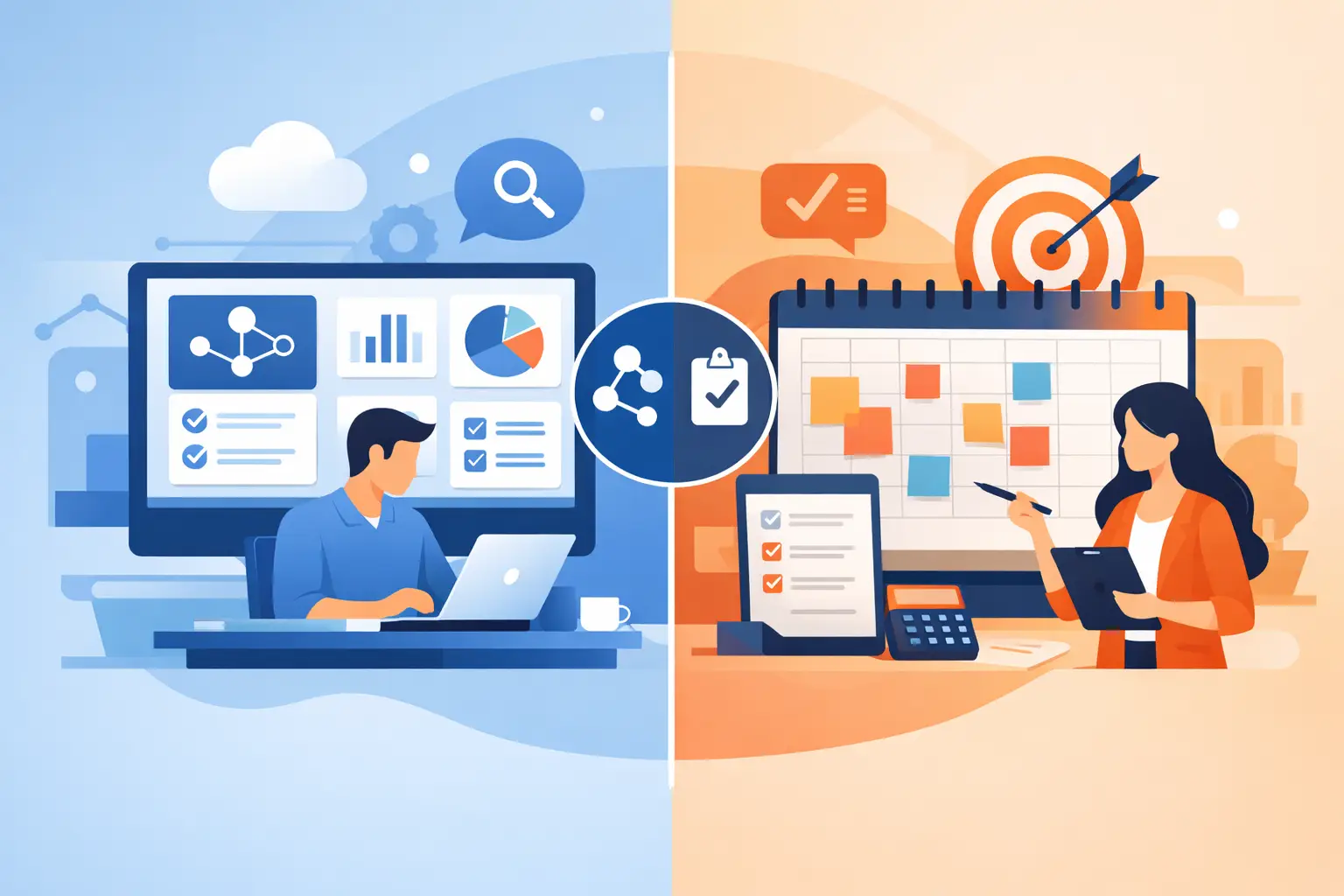
The simplest distinction is this: a CRM organizes the relationship, while a sales planner organizes the next step.
A CRM answers questions such as: Who is this customer? What has she ordered before? What products does she like? Has she paid? When did we last speak?
A sales planner answers different questions: Who do I need to contact today? What should I prepare for the next party? Which invoice needs a reminder? What business tasks are due this week?
Neither answer is enough on its own for many party-plan sellers and social sellers. A full customer list without reminders can lead to missed opportunities. A full task list without customer history can create rushed, impersonal follow-up.
Imagine the difference. A planner says, “Message Jessica today.” A CRM shows that Jessica attended a Tupperware party, asked about a specific product, and has one open order. Together, those details create a useful message instead of a generic reminder. The same pattern works for a Mary Kay customer waiting for a refill, a Scentsy customer who liked a scent sample, or a Color Street customer who asked about a design that was out of stock.
The strongest workflow connects both. When you add a follow-up task, it should lead directly to the customer record. When a customer places an order, that order should help create the next action, whether that is sending an invoice, checking payment, delivering products, or following up after use.
That connection matters because direct sales is relationship-driven. Your business does not run only on leads moving through a corporate pipeline. It runs on conversations, trust, recommendations, product parties, repeat purchases, and reliable service.
When a CRM is the better choice
Choose a CRM-focused tool when customer details are scattered and you are starting to lose track of relationships. This is often the right priority if you have an active base of repeat customers, several party hosts, or many conversations happening at once.
A CRM can help you stop asking yourself questions like, “Did she already order this?” or “Which shade did she buy last time?” It also gives you a more dependable record when a customer asks about a past order or payment.
It is particularly helpful if you want to build a better routine around customer care. You can review customers who have not ordered recently, identify people to thank after a party, and remember preferences before making a recommendation.
For beauty consultants, that might mean product routines, samples, shades, and refill timing. For kitchen and home sellers, it may mean hosts, guest orders, product demos, and delivery notes. For fragrance, style, and accessory sellers, it may mean favorites, wish lists, inventory questions, and fast follow-up while interest is still warm.
Still, do not choose a CRM simply because it has the most features. If your business is small and your immediate issue is missing appointments and follow-ups, a complex system may create more work than it removes. The right CRM should be easy to use from your phone and fit naturally into a busy day.
When a sales planner is the better choice
Choose a planner-first tool when you have customer information but lack a dependable daily structure. Maybe your contacts are saved in your phone, but messages get buried. Maybe you write tasks on sticky notes, but they disappear after a party weekend.
A sales planner can give your business a practical rhythm. You can decide what needs to happen each day instead of reacting to every incoming message. This is useful for consultants balancing family, a job, appointments, and a growing customer base.
It also helps before and after events. Before a product party or online party, you can plan invitations, host reminders, product preparation, and follow-up messages. Afterward, you can track orders, confirm payments, arrange delivery, and contact guests who showed interest but did not buy that day.
A planner can be especially helpful during busy selling weeks. One consultant may be preparing a Pampered Chef demo, another may be checking Scentsy samples before a party, and another may be planning Avon follow-up messages around a seasonal promotion. The planner keeps the week from becoming one long mental checklist.
The risk is treating the planner as a simple to-do list. A task list is helpful, but it should support sales activity and customer care, not just fill your day with busywork. Prioritize actions connected to orders, customers, parties, and follow-ups.
Why many direct sellers need both in one place
Direct sales consultants do not usually need the same software setup as a large sales department. They need a practical business hub that understands the real work behind every order.
That means customer management should connect with appointments, party planning, order management, invoices, payments, inventory tracking, tasks, and goals. When these pieces live in separate tools, you spend more time moving information than serving customers.
A purpose-built direct sales CRM can bring the relationship side and planning side together. For instance, after entering an order, you should be able to see whether the payment is open, what inventory is needed, and when to follow up. After a party, you should be able to keep guest notes, orders, and future customer actions connected.
That connected view matters in everyday moments. A Color Street seller can see which sets were reserved and which customers still need payment reminders. A Mary Kay consultant can link a skincare order to a refill follow-up. A Tupperware or Pampered Chef seller can connect a host event to guest orders and delivery notes. A Scentsy consultant can save fragrance preferences and turn them into future reorder reminders.
This does not mean every consultant needs every feature on day one. Start with the areas causing the most friction. If unpaid orders are stressing you, organize invoices and payment reminders first. If you forget to reconnect with customers, start with customer profiles and follow-up tasks. Build your system around the work you actually do each week.
A simple way to choose the right tool
Before choosing between a CRM, a sales planner, or a combined system, look at the last seven days of your business. Where did time disappear? Where did details get lost? Which task caused unnecessary stress?
If you spent too much time searching for customer conversations and old orders, prioritize CRM features. If you knew what to do but forgot to do it at the right time, prioritize planning and reminders. If both happened, a connected system will likely save more time than trying to force separate apps to work together.
Also consider how you work. If you run your business mainly from your phone, the tool must be mobile-friendly. If you sell at parties or in places with weak service, offline access can matter. If you handle customer data, choose a system that treats privacy and secure records seriously.
A good choice should fit your category without locking you into someone else’s workflow. A Mary Kay or Avon consultant may care most about customer history and reorder timing. A Tupperware or Pampered Chef seller may need party and host organization. A Scentsy seller may need fragrance notes and repeat reminders. A Paparazzi or Color Street seller may need inventory visibility and quick follow-up after live events. The best tool is the one that turns those real situations into clear next actions.
Your direct sales business deserves more than a notebook full of names and a calendar full of vague reminders. MyPink Party is designed to help independent consultants keep customers, follow-ups, parties, orders, invoices, inventory, and daily tasks organized in one practical place.
Start with one small improvement this week: record every customer follow-up in one system and give it a clear date. That one habit can create less chaos, more customer closeness, and more sales confidence.
When you are ready for a simpler structure, try MyPink Party at mypink.party.
Brand names are mentioned as neutral examples of direct sales consultant workflows. MyPink Party is not affiliated with, endorsed by, or officially connected to these brands unless explicitly stated.
You might also like

Party Commerce: A Better Way to Run Sales
Party commerce turns gatherings and social conversations into sales. Learn how to manage follow-ups, orders, payments, and repeat customers every day.

How to Log Customer Preferences for Better Follow-Up
Learn how to log customer preferences, personalize follow-up, and keep every direct sales customer detail organized from your phone with confidence daily.

Backorder Recovery for Direct Sales Consultants
Backorder recovery helps direct sales consultants protect customer trust, organize follow-ups, and turn delayed items into stronger repeat relationships.