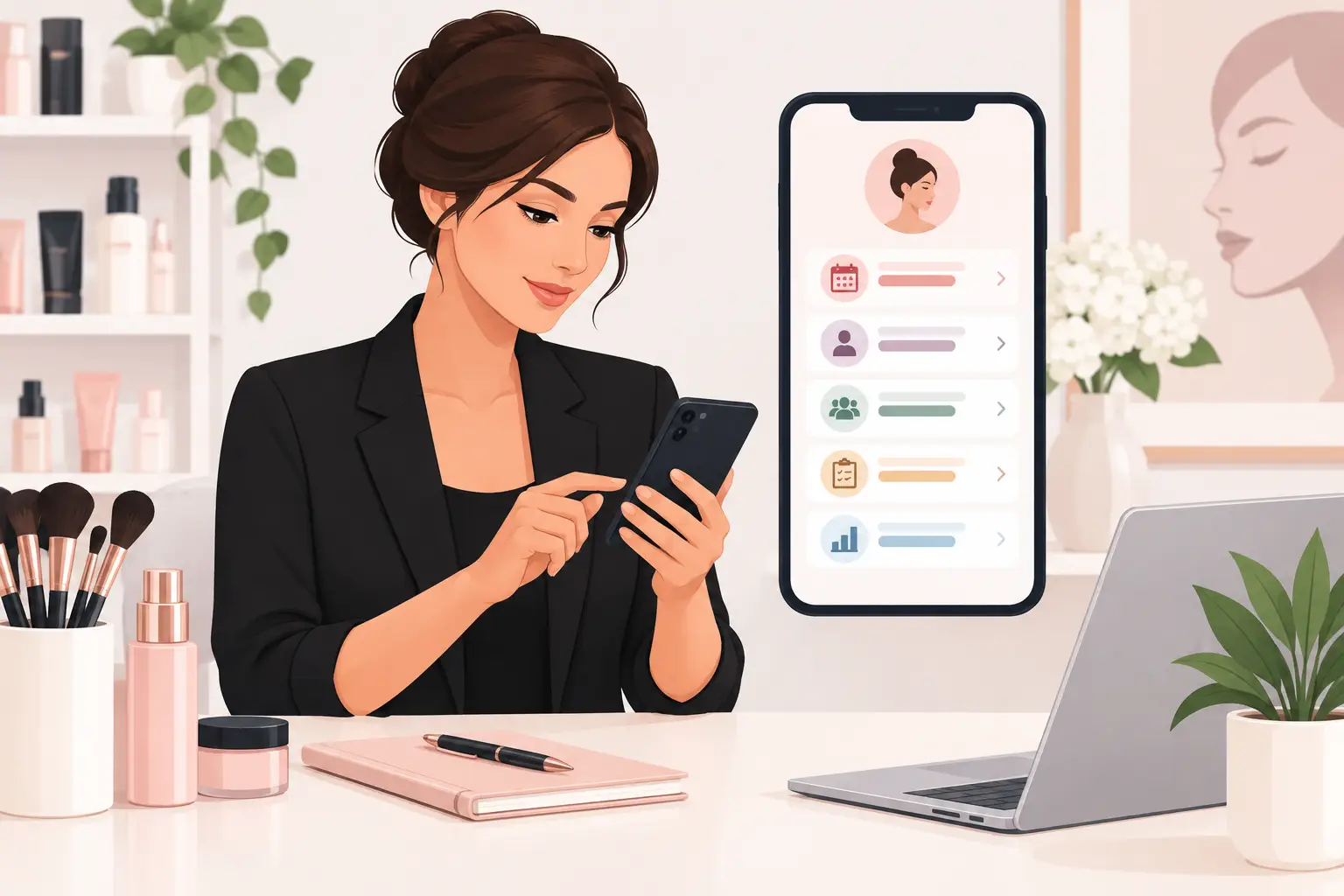
Beauty Consultant Business App: Stay Organized
A beauty consultant business app keeps customer follow-ups, parties, orders, inventory, and payments organized so you can sell with more confidence daily.
A beauty consultant business app is not just another tool on your phone. It is the place where customer details, party plans, product preferences, orders, and next steps stop getting lost between messages, paper notes, and memory. When you are serving customers around family, a day job, or other responsibilities, a clear system gives your business the attention it deserves.
For independent beauty consultants, the biggest challenge is rarely a lack of effort. It is managing many small details consistently. A customer asks about a foundation shade, another has an unpaid order, a host needs party reminders, and a regular customer may be ready to reorder. Without one organized view, even great customer care becomes hard to maintain.
The details can look different from brand to brand. A Mary Kay consultant may need to remember a customer’s skincare routine and preferred shade. An Avon representative may be tracking seasonal product interest from regular buyers. A Farmasi or Younique consultant may need to follow up after a customer tries a product for the first time. A Color Street seller may need fast access to style preferences and available sets. Different products, same problem: beauty sales depend on remembering the right detail at the right time.
What a Beauty Consultant Business App Should Solve
Generic spreadsheets and note apps can hold information, but they do not reflect how a relationship-driven beauty business actually works. You need to see the person behind the sale: what she bought, what she liked, when you last spoke, and what should happen next.
A useful beauty consultant business app brings your daily workflow into one place. That means customer profiles, follow-up reminders, appointments, parties, orders, invoices, payments, inventory, tasks, and product recommendations all support one another.
This matters because beauty sales are often built through repeat customers. A one-time order is helpful, but thoughtful follow-up creates trust. When you can quickly see that a customer purchased skincare six weeks ago or attended a party last month, your next message can be personal and timely rather than random.
For example, a Mary Kay customer who bought a cleanser may appreciate a refill check-in later. An Avon customer who asked about a seasonal product may need a reminder before the catalog changes. A Rodan + Fields or Arbonne customer may want help staying consistent with a routine. A Color Street buyer may want to know when similar designs are available again. These are small customer-care moments, but they are hard to manage if your notes live in five places.
The goal is not to make your business feel automated. The goal is to remove the paperwork and mental clutter that get in the way of genuine customer care.
Start With a Customer Record You Can Trust
Many consultants have customer information scattered across WhatsApp chats, social media messages, old order forms, photos, and a notebook in a kitchen drawer. That system can work when business is quiet. It becomes stressful as soon as you have several parties, repeat orders, or more than a few open payments.
Create one customer record for every person you serve. Include contact details, birthday information if you use it, preferred products, shade or scent preferences, purchase history, notes from conversations, and the date of the next follow-up.
The details do not need to be complicated. A note such as “prefers light coverage, interested in a skincare routine, check in after two weeks” can make your next conversation far more helpful. It also prevents you from asking the same questions repeatedly.
For a Mary Kay or Avon consultant, useful notes might include preferred shades, product routines, samples tried, or refill timing. For a Farmasi or Younique consultant, they may include product interests, texture preferences, or what the customer asked about during a live event. For a Color Street seller, they may include preferred colors, styles, seasonal designs, or gift interests.
Keep personal data private and only collect information you have a valid reason to use. A business app should help you manage customer relationships securely, not encourage you to store unnecessary details.
Make Follow-Up a Daily Habit
Following up does not mean sending the same message to everyone. It means knowing who needs attention and why. A customer may need a payment reminder, a thank-you message after an order, help using a product, or a reminder that a product is likely due for replacement.
Set a next action whenever you finish a customer conversation. If someone says, “I’ll think about it,” choose a realistic date to check back. If a customer receives an order today, schedule a short message a few days later to ask whether everything arrived safely.
A simple daily task list is often enough. Instead of wondering whom to contact, open your app and work through the customers who already have a clear next step. Consistency is more valuable than trying to catch up once a month.
A good follow-up might sound like: “Hi Lisa, I wanted to check how the moisturizer is working for you. Would you like help planning your next order before you run low?” Or: “Hi Rachel, the nail styles you liked last time have a similar option available this week. Would you like me to send you a photo?” The message feels personal because it is based on a real note, not a generic campaign.
Run Parties Without the Paper Pile
Home parties, online parties, demonstrations, and private appointments create energy for a direct sales business. They also create moving parts. You may need to confirm the host, invite guests, prepare samples, collect orders, send payment reminders, and follow up afterward.
A business app for beauty consultants should let you treat each event as a small project. Record the host, date, guest details, expected sales activity, product needs, and follow-up tasks. Before the event, you can see what must be prepared. Afterward, you can see exactly who ordered, who still needs to pay, and who may be interested in a future appointment.
This structure is especially useful for online parties. Messages and comments can move quickly, and order details can easily disappear in the conversation. Record each order as it comes in rather than relying on a final scroll through your chat history.
A Mary Kay party may create sample follow-ups and skincare questions. An Avon event may create seasonal product requests. A Younique or Farmasi live session may create product interest from people who are not ready to order immediately. A Color Street party may create quick claims, payment reminders, and style preferences that need to be captured before the conversation moves on.
You do not need an elaborate event plan for every party. The right level of detail depends on your volume. But even a small party benefits from a clear checklist and one place for all customer and order information.
Keep Orders, Payments, and Inventory Connected
An order is not finished when a customer says yes. It moves through several stages: order received, payment requested or received, product ordered from your company if needed, stock allocated, delivery arranged, and customer follow-up completed.
When those stages live in different places, mistakes happen. You might reorder an item you already have, overlook a payment, or forget that a customer is waiting for a backordered product. Connecting order management, payment tracking, and inventory gives you a clearer picture.
For example, if you carry popular beauty products in stock, update the quantity when an item is sold or reserved. Before placing a company order, check what you already have. If stock is low, you can make a practical decision about whether to replenish it based on customer demand rather than guesswork.
That matters in everyday customer moments. A Mary Kay customer may ask for her usual product, and you need to know whether it is available. An Avon buyer may want an item from a current campaign before it changes. A Color Street customer may claim a set that another customer also wants. A Farmasi or Younique customer may place an order after a recommendation, and the payment needs to be connected to the right order.
Invoices and payment status deserve the same attention. A polite reminder is easier to send when you know exactly what is due and when you last contacted the customer. Clear records also make your own bookkeeping less stressful. Your accountant or tax professional may need specific reports, so use your business records consistently and follow the rules that apply where you operate.
Plan Your Week Around Revenue-Creating Work
Busy does not always mean productive. It is easy to spend an evening searching for order details, rewriting customer notes, or trying to remember who needs a reply. Those tasks feel urgent because they are disorganized, but they do not always move your business forward.
Use your app to create a short weekly rhythm. At the start of the week, review upcoming appointments and parties. Check open orders and unpaid invoices. Look at inventory that needs attention. Then identify the follow-ups that are most likely to strengthen customer relationships.
Your daily plan may be as simple as confirming one host, checking in with five recent customers, packing two orders, and reviewing one invoice. Small actions become powerful when they happen regularly.
A beauty consultant’s week often becomes clearer when tasks are grouped by purpose. One block might be for post-party guests. Another might be for reorder reminders. Another might be for unpaid invoices and delivery notes. A Mary Kay consultant may use one block to review skincare refills. An Avon representative may use another to prepare seasonal customer messages. A Color Street seller may review which sets are reserved, paid, and ready to deliver.
Goals can help here, but keep them practical. Track the activities you can control, such as follow-ups completed, parties booked, orders delivered, or customer care messages sent. Sales results matter, but consistent service is often what supports repeat business over time.
Choose a Tool That Fits a Consultant’s Real Day
The best app is not always the one with the longest feature list. It is the one you will actually use between school pickup, work breaks, customer messages, and evening packing sessions.
Look for a mobile-first tool that is easy to use, gives you a fast view of today’s tasks, and keeps customer records connected to orders and events. Offline access can also be useful when you are at a home party or traveling with limited reception. Privacy and secure data handling should be part of the decision, not an afterthought.
Generic CRM software may suit a large sales team with complex pipelines. A spreadsheet may be enough for someone just starting with a handful of customers. But if your work includes parties, repeat orders, samples, personal recommendations, and payment follow-up, a direct sales CRM is usually a better fit.
The right app should match the rhythm of beauty consulting. You need quick customer notes, not a corporate pipeline. You need product preferences, not just contact fields. You need tasks that connect to real customer moments: “check how the sample worked,” “send payment reminder,” “follow up after party,” “ask about reorder,” or “confirm shade before ordering.”
MyPink Party was built for this kind of consultant workflow: customer care, parties, orders, inventory, invoices, tasks, and goals in one practical place. It helps replace scattered systems with a daily routine you can trust.
Your customers should feel remembered, not managed. Give your business a structure that protects your time and supports the personal service that makes people want to return.
When you are ready for less chaos, more customer closeness, and more sales confidence, try MyPink Party at mypink.party.
Brand names are mentioned as neutral examples of direct sales consultant workflows. MyPink Party is not affiliated with, endorsed by, or officially connected to these brands unless explicitly stated.
You might also like

Party Commerce: A Better Way to Run Sales
Party commerce turns gatherings and social conversations into sales. Learn how to manage follow-ups, orders, payments, and repeat customers every day.

How to Log Customer Preferences for Better Follow-Up
Learn how to log customer preferences, personalize follow-up, and keep every direct sales customer detail organized from your phone with confidence daily.

Backorder Recovery for Direct Sales Consultants
Backorder recovery helps direct sales consultants protect customer trust, organize follow-ups, and turn delayed items into stronger repeat relationships.